

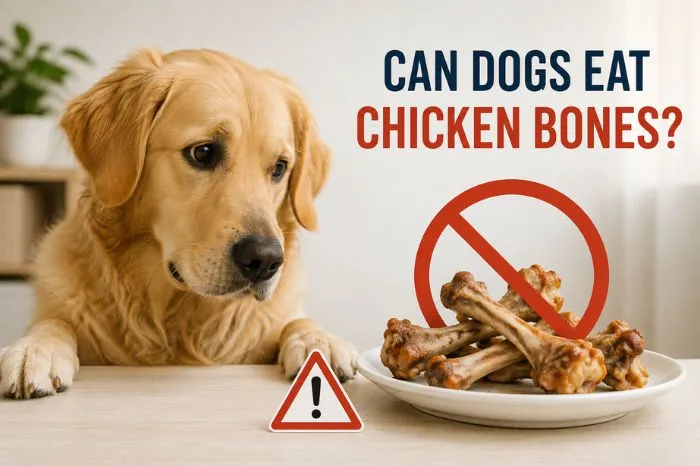
Dogs should not be intentionally fed chicken bones. Cooked chicken bones can become brittle and splinter, while raw chicken bones still carry choking, dental, gastrointestinal and bacterial-contamination risks. If your dog has swallowed a chicken bone, contact your veterinarian for advice and watch closely for signs of choking, vomiting, abdominal pain, blood in vomit or stool, lethargy, loss of appetite or difficulty passing stool.
Seek urgent veterinary care now if your dog is struggling to breathe, choking, repeatedly gagging or retching, collapsing, vomiting repeatedly, showing severe abdominal pain, or passing blood. Do not induce vomiting unless a veterinarian specifically tells you to do so.
Finding out that your dog has eaten a chicken bone can be frightening, but the right response is not to panic or assume the worst. Some dogs pass swallowed material without developing complications, while others can develop a blockage, injury or choking emergency. The safest next step depends on what was swallowed, whether the bone was cooked or raw, the size and health of the dog, and whether any symptoms are already present.
VCA Animal Hospitals warns that bones can cause problems ranging from broken teeth and mouth injuries to choking, obstruction and gastrointestinal damage. Raw animal products also introduce food-safety concerns because they may carry bacteria such as Salmonella and Listeria.
Are Chicken Bones Safe for Dogs?
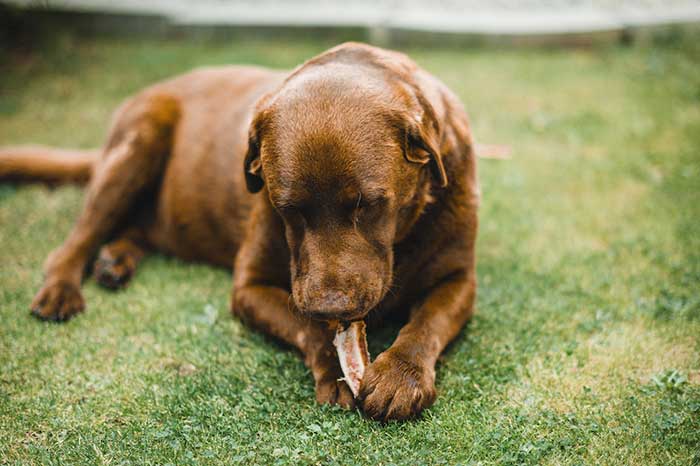
No chicken bone should be treated as risk-free. Cooked chicken bones are especially concerning because heating can make bones more brittle and more likely to break into sharp fragments. Those pieces can become lodged in the mouth, throat or esophagus, or cause irritation, obstruction or injury farther down the gastrointestinal tract.
Raw bones are sometimes described online as a safe alternative, but that is too absolute. Raw bones can still damage teeth, become lodged, cause gastrointestinal problems and expose pets and people to foodborne pathogens. The U.S. Centers for Disease Control and Prevention (CDC) does not recommend feeding raw pet food or treats to dogs and cats, and includes uncooked bones among raw pet-food ingredients.
Cooked vs. Raw Chicken Bones
| Type of bone | Main concerns | Should you intentionally feed it? |
|---|---|---|
| Cooked chicken bones | Brittleness, splintering, choking, mouth or throat injury, obstruction and gastrointestinal injury | No |
| Raw chicken bones | Choking, dental injury, obstruction or gastrointestinal injury, plus bacterial contamination from raw animal products | No risk-free recommendation; discuss diet choices with your veterinarian |
Raw bones may be less brittle than cooked bones, but “less likely to splinter” does not mean “safe.” A dog’s size, age, chewing behavior, dental health and gastrointestinal history can all influence risk, and no simple rule can guarantee that a swallowed bone will pass without a problem.
What Can Happen If a Dog Eats a Chicken Bone?
A swallowed bone can cause different problems depending on where it travels and whether it breaks into smaller pieces.
Choking or an airway obstruction
A bone can become stuck near the back of the throat or interfere with the airway. Difficulty breathing, severe coughing, gagging, pawing at the mouth, blue or pale gums, collapse or obvious distress should be treated as an emergency.
Mouth, throat or esophageal injury
Sharp fragments can cut the mouth or become lodged in the esophagus. The Merck Veterinary Manual notes that bones are a common type of esophageal foreign object in dogs. Repeated swallowing, drooling, gagging, retching or difficulty swallowing can be warning signs that require prompt veterinary assessment.
Stomach or intestinal obstruction
Bone fragments may become stuck in the stomach or intestines instead of passing normally. Gastrointestinal obstruction can cause vomiting, loss of appetite, abdominal discomfort, lethargy and other signs, and unresolved obstruction can become an emergency.
Gastrointestinal injury or perforation
Sharp pieces can injure the gastrointestinal tract. A perforation is a serious complication because leakage from the gastrointestinal tract into the abdomen can lead to severe inflammation or infection and requires urgent veterinary care.
Constipation and painful passage
Bone material can collect in the lower digestive tract and make stool difficult or painful to pass. Repeated straining, obvious discomfort or an inability to defecate warrants veterinary advice.
Bacterial exposure from raw chicken
Raw chicken and other uncooked animal products may contain harmful bacteria. This can affect the dog and can also create a household food-safety risk through contaminated food, surfaces, saliva or stool.
My Dog Ate a Chicken Bone: What Should I Do?
- Check for immediate danger. Look for breathing difficulty, choking, repeated gagging, collapse or severe distress. If any of these are present, seek emergency veterinary care immediately.
- Contact your veterinarian. Explain what your dog swallowed, whether the bone was cooked or raw, approximately how much was eaten, when it happened and whether your dog has any symptoms.
- Follow professional instructions. Your veterinarian may recommend monitoring at home or may advise an examination, imaging or other care depending on the circumstances.
- Monitor closely. Watch appetite, energy level, vomiting, bowel movements, abdominal comfort, breathing and swallowing over the period your veterinarian recommends.
- Escalate if symptoms appear. New or worsening signs should prompt another call or urgent veterinary assessment.
What Not to Do After Your Dog Eats a Chicken Bone
- Do not induce vomiting unless a veterinarian specifically instructs you to do so.
- Do not perform a blind finger sweep inside the mouth or throat.
- Do not pull forcefully on an object that appears lodged.
- Do not automatically give bread, oil, bulky food or another home remedy without veterinary advice.
- Do not assume that a dog is completely safe simply because it looks normal immediately after swallowing the bone.
Warning Signs After a Dog Swallows a Chicken Bone
Symptoms do not prove that a bone is causing a particular complication, but they can signal that veterinary evaluation is needed.
| Warning sign | Why it matters | Action |
|---|---|---|
| Difficulty breathing, choking or collapse | Possible airway emergency | Emergency veterinary care now |
| Repeated gagging, retching, drooling or difficulty swallowing | Possible mouth, throat or esophageal problem | Urgent veterinary assessment |
| Repeated vomiting or vomiting blood | Possible obstruction or gastrointestinal injury | Urgent veterinary assessment |
| Bloated or painful abdomen | Can accompany serious gastrointestinal problems | Urgent veterinary assessment |
| Blood in stool | May indicate gastrointestinal irritation or injury | Contact a veterinarian promptly |
| Loss of appetite, marked lethargy or unusual behavior | Non-specific but potentially important after ingestion | Contact a veterinarian |
| Constipation, repeated straining or difficulty defecating | Possible painful passage or obstruction | Contact a veterinarian |
Are Chicken Bones More Dangerous for Puppies or Small Dogs?
Puppies and small dogs may have less room for a swallowed object to pass, but size alone does not predict the outcome. A large dog can also choke, fracture a tooth or develop an obstruction or gastrointestinal injury. Age, chewing style, the number and size of bones swallowed, whether the bones were cooked, and the dog’s underlying health all matter. For additional small-breed feeding context, SpoliaMag’s Cavapoo care guide explains why diet should be considered in relation to a dog’s size, age, weight and health.
Puppies, senior dogs and dogs with existing gastrointestinal or immune problems deserve extra caution because their health status may change how well they tolerate complications or foodborne germs. Your veterinarian can assess the individual risk more reliably than a general size-based rule.
How Long Does It Take for a Dog to Pass a Chicken Bone?
There is no single safe countdown that applies to every dog. Some swallowed material may pass through the gastrointestinal tract without obvious problems, while a fragment can become stuck or cause symptoms before it reaches the stool. Rather than relying on a fixed number of hours, follow the monitoring period recommended by your veterinarian and seek care if concerning symptoms appear at any point.
Can Chicken Bones Kill a Dog?
Serious complications from swallowed bones can be life-threatening, particularly if a bone obstructs the airway, perforates the gastrointestinal tract or causes a severe obstruction. That does not mean every accidental ingestion will become fatal. The appropriate response is to assess symptoms, contact a veterinarian and act quickly if warning signs develop.
Can Dogs Eat Boneless Chicken?
Plain, fully cooked, boneless chicken can be suitable for many dogs when served in an appropriate amount and without harmful seasonings or ingredients. It should not automatically replace a complete and balanced dog food, and dogs with allergies, pancreatitis, gastrointestinal disease or other medical conditions may need individualized dietary advice.
If you prepare chicken for your dog, remove every bone before serving it and avoid heavily seasoned, fried or high-fat leftovers.
Safer Alternatives to Chicken Bones
If your goal is to give your dog something satisfying to chew, ask your veterinarian about chew products that suit your dog’s size, chewing style and dental health. No chew is completely risk-free, so supervision still matters.
- Dog chews designed for the dog’s size and chewing behavior
- Veterinary-recommended dental chews
- Products carrying the Veterinary Oral Health Council (VOHC) Seal of Acceptance for plaque or tartar control
- Plain, cooked, boneless chicken as an occasional food or topper when appropriate for the individual dog
- Complete and balanced commercial dog food or a properly formulated diet recommended by a veterinarian or veterinary nutritionist; the WSAVA Global Nutrition Guidelines provide evidence-based nutrition resources for veterinary teams and pet owners
Hard chews can still damage teeth and any chew can become a choking hazard if pieces are swallowed, so choose an appropriate size and supervise chewing. SpoliaMag’s Havapoo vs. Cavapoo guide also covers feeding and treats for small companion dogs, including the need to avoid cooked bones.
How to Prevent Accidental Chicken-Bone Ingestion
- Put cooked bones directly into a secure bin that your dog cannot access.
- Do not leave plates, roasting trays or takeaway containers within reach.
- Use a lidded trash can or keep food waste behind a closed door.
- Teach cues such as “leave it” and “drop it” using reward-based training.
- Keep dogs away from food-preparation areas during busy meals or gatherings when necessary.
- Remind guests and children not to give bones or table scraps to the dog.
If you are a new pet owner, SpoliaMag’s guide to adopting a pet covers the wider responsibilities that come with bringing an animal into the family.
Bottom Line
Dogs should not be intentionally fed chicken bones. Cooked bones are particularly risky because they can become brittle and splinter. Raw bones are not a guaranteed safe alternative and add bacterial-contamination concerns. If your dog has already swallowed a chicken bone, check for immediate danger, contact your veterinarian for individualized guidance and monitor carefully for warning signs.
This article provides general educational information and is not a diagnosis or a substitute for veterinary care. If your dog is choking, struggling to breathe, collapsing or showing other severe symptoms, seek emergency veterinary care immediately.
Frequently Asked Questions
No. Cooked chicken bones should not be intentionally fed to dogs because they can become brittle, splinter and create choking or gastrointestinal risks.
Raw chicken bones should not be described as completely safe. They may be less brittle than cooked bones, but they still pose choking, dental and gastrointestinal risks and can carry bacteria from raw animal products.
No, not unless a veterinarian specifically instructs you to do so. Bringing a sharp object back up can create additional injury risk.
Yes, calling your veterinarian is a sensible precaution because risk depends on the dog, the bone and the circumstances. A dog can appear normal initially even though monitoring is still warranted.
Repeated gagging, retching, drooling, difficulty swallowing, coughing, breathing difficulty, vomiting or obvious distress can be warning signs. These symptoms require prompt veterinary assessment, and breathing difficulty is an emergency.
Some swallowed bone material may break down or pass through the digestive tract, but that does not make ingestion safe. A fragment can still lodge, obstruct or injure tissue before passing.
Chicken wings contain small bones and should not be assumed safe simply because meat surrounds the bone. Cooked wings are particularly concerning because their bones can splinter; raw wings still carry bone and bacterial risks.
For many dogs, plain, fully cooked, boneless chicken in an appropriate portion is a safer option. Avoid bones, heavy seasoning, onion, garlic and excessive fat, and check with your veterinarian if your dog has a health condition or special diet.